

From TikTok to a record deal: Mad Tsai on $1,000 offers and five years without a label
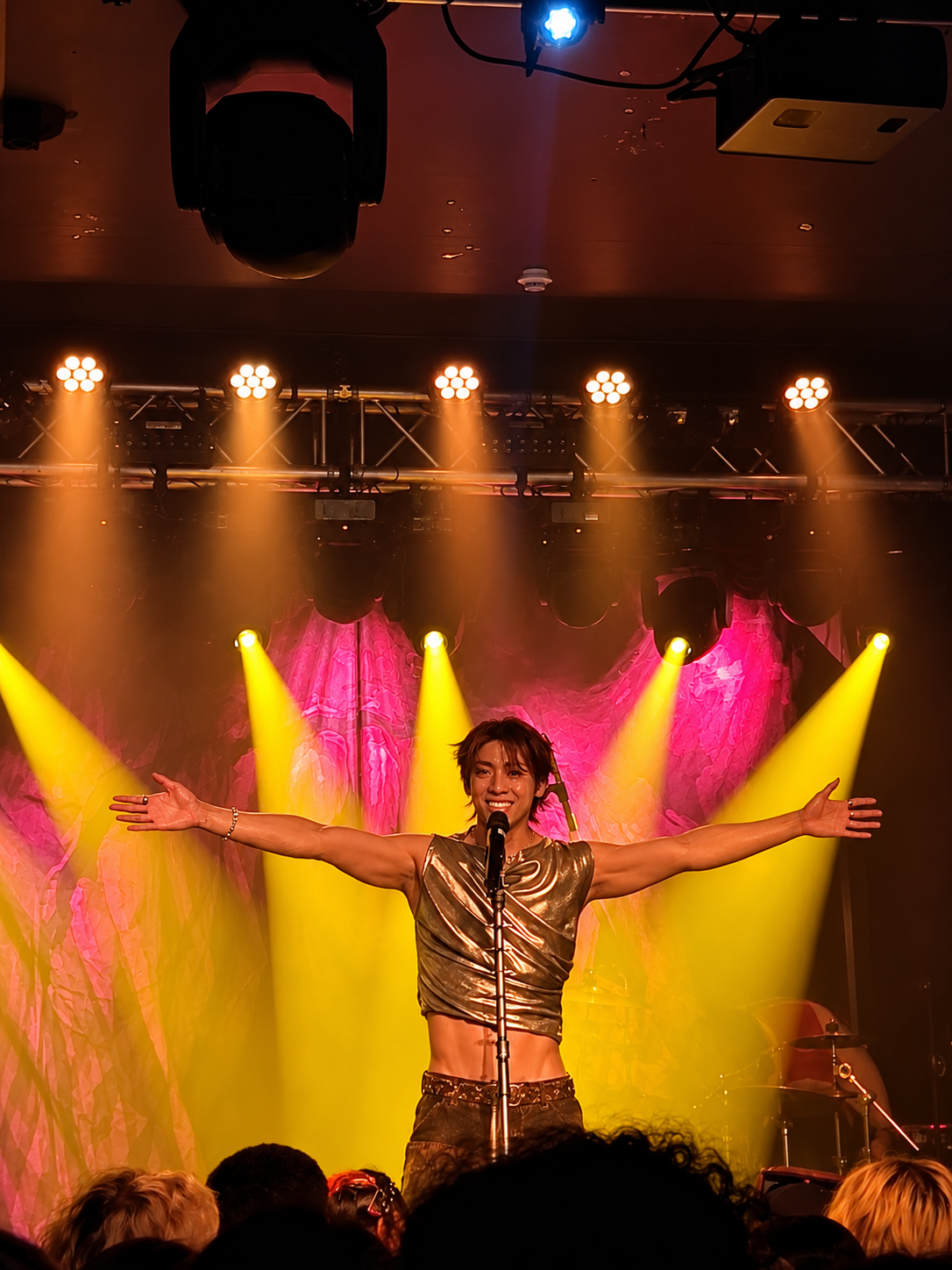
Credits: Zutter.co.uk Photographer: Paola
He turned down $1,000 offers for his masters, paid off his student debt with streaming royalties and spent five years building a pop career without a label. Mad Tsai on why he finally signed, and what he's building next.
For five years, Mad Tsai did what most artists only talk about: he built a career without a label. The Chinese, Taiwanese and Peruvian American singer grew up in Orange County, California, and wrote, co-produced and promoted his own songs between UCLA classes and night shifts at a poke shop. His TikTok following turned into more than 225 million streams on his debut EP alone. In November 2025 he signed with the independent label Rebellion Records, and in July their first big project together, the CANINES EP, arrived, followed by his first tour of Europe.
We met him after the last show of that European leg, at Oslo Hackney on 30 September, in the café of his hotel. In keeping with every London cliché, we talked for an hour over tea. It was his first time in the city, and it felt rude not to.
This interview has been edited for length and clarity. Interview by Paola and Daily Matcha.
"A separate version of myself"
ZUTTER: Welcome to London. For anyone meeting you for the first time: who is Mad Tsai, in one sentence?
Mad Tsai: Mad Tsai is my pop star alter ego. Honestly, I consider Mad Tsai like a character in my mind. It's kind of a separate version of myself.
Z: It's your first-ever UK show and the last night of the European leg. How are you feeling?
MT: I feel kind of tired because, obviously, playing ten shows in a little over two weeks is quite draining, especially for my first time. This is my first headline tour and my first time in Europe, so it feels like I've had whiplash every single day. But I also just feel really proud of myself that I accomplished it, and I'm excited to rest and get ready for the North America leg.
Z: You told Forbes some European dates sold out before you'd even arrived. Did that surprise you?
MT: It was really good. Honestly, I didn't really know what to expect, or how big my audience was in Europe. But then I saw that we sold out almost every single show, and we packed out every single venue. It was just honestly shocking to me to see everybody's faces in person.
Bedroom to viral
Z: Let's go back to the beginning. You started writing songs at 13. What was music for you then?
MT: When I was 13, I had just gotten my hands on the internet and I was just finding out about pop music. I was very sheltered. I was listening to Marina and the Diamonds and Lana Del Rey, and going on Tumblr, and I was writing songs on GarageBand on my first-generation iPad, pressing my little fingers on the keys and just trying to figure out chords and what I liked. I was kind of teaching myself about pop music and how to write music.
Z: Then 2020 happens. You're a student at UCLA, you start posting on TikTok, and "Young Nights" goes viral. Walk me through what happens the day after a song blows up.
MT: That was a song that I wrote on the last day of high school. I wrote it feeling very disillusioned about my high school experience, because I had honestly dedicated my entire life to school up to that point. I was the perfect Asian golden child. I didn't have any time for myself. I didn't really know who I was outside of school.
I held on to that song. When the pandemic started, I downloaded TikTok, and I was like, "I have this song, I might as well just sing it and post it online." Me with my little ukulele. I woke up the next morning and I think I had 50,000 likes. I was like, "Oh my God, Mom, look at this." In the context of my career, it feels kind of like a little seedling of what was to come.
Z: I was going to ask who you called, but you've already said: you ran to your mum.
MT: Yeah, I was living at home with my parents and my sister back in Orange County. I just ran to my mom's room and was telling her, "Oh my God, this song is going viral!" I honestly don't think she was very impressed. But I was really, really happy.
Z: You've called "Boy Bi" a writing exercise that ended up being the song that introduced you to most people. Was it the right song to launch with?
MT: It was just the song that I wrote for fun. I thought it was very silly in the moment. I really didn't take myself very seriously, and I didn't really think I was going to become an artist at the time. Then it blew up and people were asking me for the song, and my manager at the time was just like, "This is the debut single." And I was like, "This is the debut single?" In my head, my first single as an artist would be something very, very serious, because I was so used to writing all these sad songs. But I wouldn't change it in any way. I think it all happened for a reason.
Z: You were a full-time student while all of this was happening, feeling like Hannah Montana leading a double life. How did you manage both?
MT: Honestly, I was stressed all the time. I was working a restaurant job at a poke shop, slinging raw fish every single day. I was also writing songs every single day and posting them on TikTok, and doing school online because it was the pandemic. I would wake up and immediately clock into my online classes, finish all my homework at once, and then clock in to my night shift at the restaurant. Then I would go home and write a song at 1am. I had this writing exercise where I would take 15 to 30 minutes to write a song, record myself doing multiple takes, edit it and post it. Then I would go to sleep and do the same thing over again.
"This industry is vicious"
Z: For the next few years you did something a lot of artists talk about but few pull off: you stayed independent. Did labels come calling after "Boy Bi"? If so, what made you say no?
MT: Actually, after "Boy Bi", I was getting some random reach-outs from tiny little labels, and the deals would be like, "We want the master to the song, and we'll give you $1,000." It was so insane to me. I was also looking into music law and music business at the time, and I was in the midst of switching to the music industry major at UCLA. I just remember being like, "Wow, this industry is vicious." The minute that you have any semblance of a moment, people will pounce on you and try to fully take advantage of you.
So I remember sitting down and being like, "I think I'm going to stay independent and really hold off from partnering up with a label," because I want to make sure that I have leverage when I walk into these meetings. I want to figure out who I am as a person and as a creative before I even get into any of that, because I don't want to misstep, regret it and be in debt.
Z: What's the difference between an investor believing in you and a label believing in you?
MT: My view of the music industry is a little bit more pessimistic than a lot of other people's, so I tend to conflate investors and labels sometimes. But I feel like an investor is just throwing money at you, while a label is trying to nurture you as an artist and as a creative, and wants to see you grow and reach your full potential. Not everyone is a pop star out the gate. There's training involved, and shaping yourself to be that person. I don't think it happens overnight.
Z: When your demo of "stacy's brother" went viral, you held the studio version for about a year. How do you decide when to release a song that's already blowing up?
MT: I think it wasn't necessarily by choice, if I'm being completely honest. I didn't really have the funding to do what I wanted to do. I knew that "stacy's brother" was a special moment, and I fought so hard for it, because I was like, "I want a big music video for this, but I just don't have the funds." So it was about finding out who could invest in this as an independent artist, so I could retain my masters and my creative freedom.
It wasn't just having a label and being like, "Throw money at this and let me do this video." I had to go out of my way. I also remember I used some of my scholarship money from UCLA to fund my very first music video. Everything was very, very scrappy for me.
Z: homecoming! has been credited with more than 225 million streams. What did those streams actually mean for you financially?
MT: Funnily enough, it all came from streaming, because I wasn't able to tour. I was in school at the time, and I couldn't take time off to go and perform. And I really didn't have the means to be putting out merch. It was literally just me, doing everything. So everything just came from streaming, and because I wrote all of those songs by myself in my bedroom, a lot of those royalties just went to me. For songs like "killer queen", which was my biggest song, I produced the day-of demo in my room on Logic in between classes, and then sent it over to the producers. So it paid off my student debt, which I was really happy about. And my parents were very happy about [it].
Z: Your promo videos have their own very recognisable style, and people have written about them as a marketing strategy. How much of that is just you being you, and how much is strategy?
MT: I think it's kind of one and the same, really. I don't like to be a person that sits around making a whole marketing plan for things. I usually just kind of do things on the fly, and if something catches fire, then I just continue to go with it. I think a lot of the fans have just loved how real it is. I remember seeing so many people on TikTok falling into the pitfalls of the same tactics every single time, and I was like, "If I'm an artist and I want to stand out, then why wouldn't I just do my own thing?"
Z: What's the first thing you'd tell an independent artist to hire?
MT: The biggest thing you can do is be your biggest advocate. If you don't believe in yourself, then who the hell else is going to believe in you? But I think the two most important players on your team that you should find immediately are a manager and a lawyer. In the music business, there's a lot of legal jargon and a lot of business things on the back end that only a lawyer can really figure out, to make sure that you don't get screwed over. And having a manager that watches your back and is there in your corner fighting for you is also really important.
I really didn't have much of a team, to be honest. I only had my manager and my lawyer at the time. It was very sparse. But I learned so many lessons, and now I know exactly what I want going into future releases, future partnerships and future conversations.
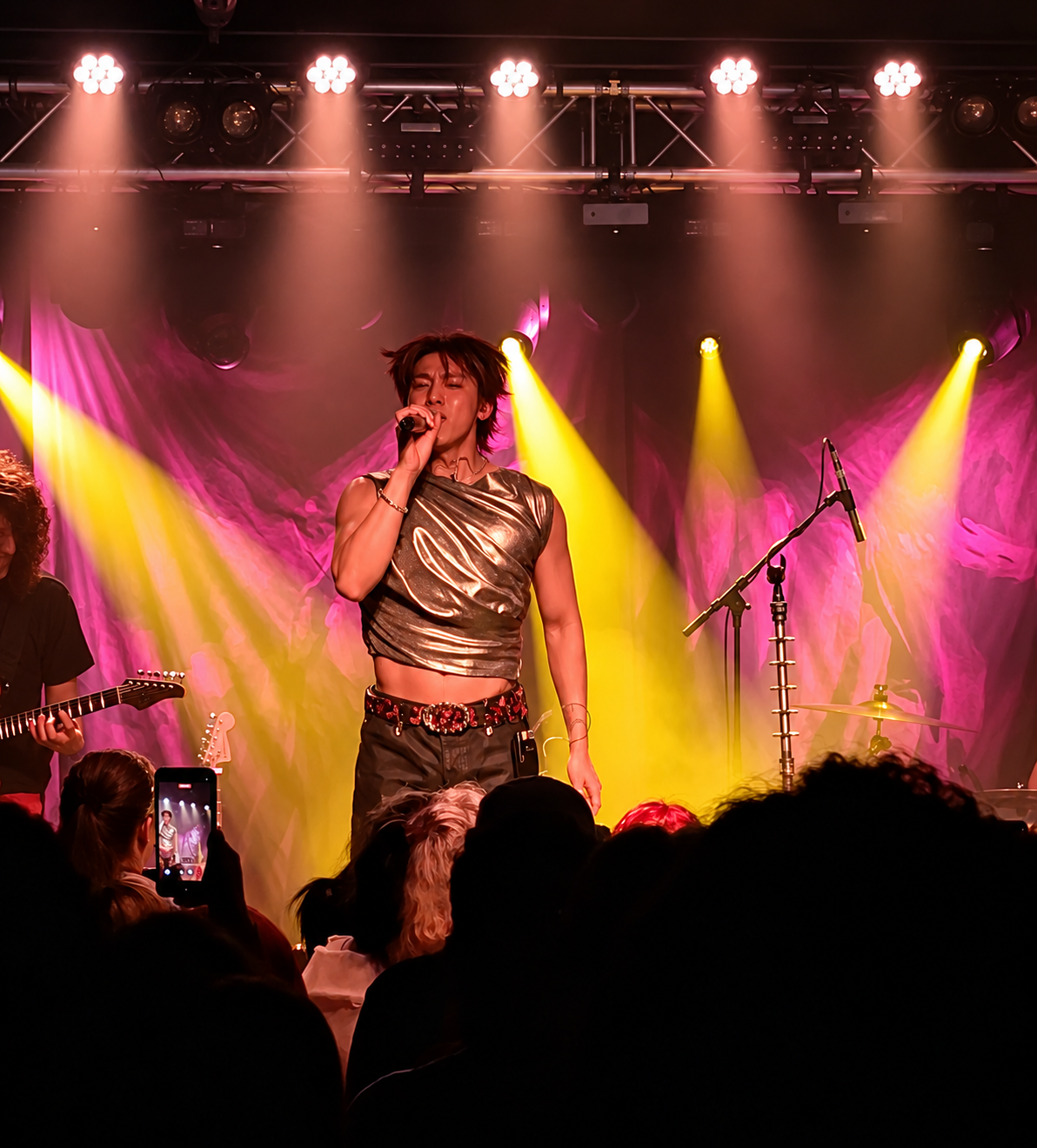
Credits: Zutter.co.uk Photographer: Paola
"I've never seen that money"
Z: After teenage nightmare came out in 2024, something strange happened: someone stole "One Of The Boys", uploaded it as their own and used AI to remix it. How did you find out?
MT: TikTok has this algorithm that identifies when the ID of a song registers to something pre-existing on Spotify or Apple Music. So when I was posting snippets of my own song that I had not even released yet, it was being identified as another song that was already on Spotify. I was so confused. So I listened to the song, and it was the exact same song. They didn't even bother taking out the little TikTok sound at the very end of it. They downloaded the video and uploaded it straight to Spotify, and then they used AI to remix it numerous times. I think it was like 20 times. It was definitely a fake artist account that was just trying to farm money out of my song.
The clip of my own song that I had not released yet had got 110,000 streams on Spotify already. It was comforting for me to know that there was a demand for the song, but it was so disappointing to see that somebody was making money off my song. And still, to this day, I've never seen that money. That money has never gone back to me.
Z: Is that what made you decide to speak up about it publicly?
MT: Yeah. I'm against AI in a creative field for numerous reasons, but seeing that really radicalised how I feel about generative AI, especially in music. With AI, you're pulling from human art. You're taking pre-existing material that humans have created and making this weird amalgamation that has no soul.
Signing with Rebellion Records
Z: In 2023 you tweeted that the day you signed with a label, it would be "over for y'all". In November 2025, you signed. Why sign, and why then?
MT: I'm so grateful for Rebellion Records. I wouldn't have been able to put out the CANINES record without them. I was independent for five years, and I was so scrappy and so used to doing everything myself that my bandwidth was just stretched so thin. I was writing the songs, I was going to the studio, I was marketing everything myself. And I love doing those things, but on top of that, having to worry about all the business back-end stuff, and then trying to get financial support for everything, it was just so stressful. So I knew in my heart, I was like, "I think it's time for me to partner up with a label, properly do a release and figure out who I am as an artist."
Rebellion has been an amazing partner. They've never got in the way of my creative process, which I absolutely love. And it still feels like I'm independent, because they are indie, and I'm still creating everything in my own way. But now I don't have to worry about where I'm going to get the funding for this music video, or how I'm going to get money to market my music.
Z: What does a label do for you now that you couldn't do yourself?
MT: Money? No, no, I'm joking. But I'm half joking. I think I'm so encapsulated in my world sometimes, and I fall into my little Mad-isms, I guess. Having amazing A&Rs and a great team to tell me, "Hey, this sounds great," or, "Hey, maybe we should work on this a little bit more", having new ears and eyes on my music has really helped me become a better artist.
Z: And is there anything you miss about doing it all yourself?
MT: I still do everything on my own, so I don't think there's anything that I miss. I don't miss struggling. [Laughs]
Z: If a 19-year-old going viral on TikTok tonight asked you whether to sign, what would you tell them?
MT: My advice is, good Lord, please stay independent. I've seen so much in this industry. I've seen people who sign so early on, and they're still paying off their debt to a label. Whenever I meet new artists, I want to take them under my wing and protect them, because I'm just like, "This industry is brutal, but it's so beautiful." It is so rewarding, but only if you really advocate for yourself and watch your back.
I tell all my friends, "Please, if you're going to sign something, read every single piece of text on that paper. Double, triple check. Don't use an AI-generated summary." And I send them my notes from my music law classes at UCLA, because if you don't understand the baseline of music law, or just music law jargon, you will get lost and you will sign something that you don't want to sign. So please be careful, and make sure that you walk into these rooms having leverage.
"The whole vision started with 'BITE'"
Z: The first big project under the new deal is CANINES: eight songs, one story, and a lot of teeth. Even before you signed, you said you wanted to make fun, danceable, unhinged songs. How did that grow into the whole CANINES world?
MT: I had just released teenage nightmare, and a lot of the songs on that project are just so sad and so vulnerable, which I love. But it took so much out of me as a person to tell that story and to open up in that way. I left that era knowing that I just wanted to have fun. When I wrote "One Of The Boys", I had so much fun in the studio that day. It reinvigorated my passion for being an artist. Then we got to "BITE", and I think "BITE" is when everything really changed, because it blended the world of these fun, silly, more dancey pop songs with the darker edge that I'm so used to.
The same night that I wrote "BITE", I posted it online. I didn't even tell my managers. I just posted the day-of demo, no mix, no nothing. It blew up immediately, and I knew this world that I was building was something special. I immediately made this slide deck and mood board of everything that I wanted. I was like, "I'm gonna dye my hair red, I'm gonna do this." The whole vision started with "BITE", and everything just followed suit.
Z: "DIET" almost didn't come out. You shelved it until friends, including MICO, told you to release it. How did that happen?
MT: I wrote "DIET" with Maria Landi and David Balshaw, and I didn't really know how to feel about it. I was like, "Oh no, this is too EDM." I didn't think about the song for, I think, seven or eight months. Then I hosted a little listening party for my friends, playing them demo after demo, and we got to "DIET". One of my really good artist friends, MICO, was just like, "Mad, you need to release the song." I was like, "What do you mean? I'm not a fan of this song." But I respect MICO so much, and slowly it was starting to grow on me. I brought it to my long-time collaborator Drew Polovick, we added more guitars, and MICO played guitar on the song. It changed my complete perspective.
Z: You've said K-pop influences you more and more, and you've named LE SSERAFIM and (G)I-DLE. What have you taken from how K-pop companies build an era: concepts, visuals, rollout, fan engagement?
MT: The funny thing is, before I even became a K-pop fan, I was writing essays at UCLA about K-pop, from an outsider perspective, because I thought it was so fascinating, especially the difference between fans of K-pop and fans of the Western music industry, and between the artists. I remember writing so many essays exploring how K-pop evolved into the way that it is now. And from a research perspective, I was like, "I need to listen to these songs." And then all of a sudden I was like, "Wait, this is fun." I love the dances and I love the visuals, and it just feels larger than life. That really inspired me as an artist who was really burnt out at the time.
I think it really carried through into "BITE" and the music video. In preparation for this tour, I've been in dance lessons, vocal lessons and personal training, because I think the work ethic of idols is just something that's very commendable. I mean, the structure of K-pop is obviously structured to be that way, and I don't know if they have a choice in how hard they work.
Z: You have a choice, though. You can take the best out of K-pop. Is there anything about K-pop training you wouldn't want to follow?
MT: I think there's issues with the Western music industry and there's issues with the Eastern music industry. But we both learn from each other. With K-pop crossing over and more people in the United States listening to it, now we're getting fans of both Western and Eastern music, which I am. I get to bridge the gap between them. Like you said, I got to take the best parts of both and try to forge my own path.
Z: Are there any idols who've really inspired you, or that you follow?
MT: So many of my fans know this, but I'm a huge fan of ATEEZ. I think they're my favourite boy group. I mostly listen to girl groups, though. I love NewJeans, I love LE SSERAFIM. But there's this one particular idol, and all my fans know. They've given me so many photo cards. During this tour, I probably have 80 photo cards of San from ATEEZ. I'm a huge fan of them, and I would love to collaborate with them.
Z: You're also a huge Lady Gaga fan, and you've talked about wanting to go big and theatrical. What draws you to that?
MT: I've never been in theatre, but I feel like I've always been attracted to the big and theatrical. Pop music has always had this view of being lowbrow, or lower than other forms of music, and I don't think that's true. As people say, hating on pop music doesn't make you deep. The beautiful thing about pop music is that it's so versatile. It feels like I have a blank canvas every single time. I love creating these larger-than-life concepts, and I think that's going to carry through into my debut album, because I have a very distinct vision for what my debut album is going to be like.
Z: Can you give us a teaser?
MT: I did play an unreleased song on tour. I'm not gonna say what it's called, but it's one of my favourite songs that I've written. I wrote it, I think, at the beginning of 2024, and it's been a North Star for me writing this debut album. There's been this one fan on Twitter that has tweeted every single day, like, "Day 80 of not having the song." It's so funny, because I'm just like, "You will get the song, I promise."
Z: You told Forbes you wanted a theatrical show like Chappell Roan or Lady Gaga. What's been the most ambitious part of preparing this tour?
MT: This is my first headline tour, and I know that this is a much smaller scale than massive pop stars. But I was like, "I want outfit changes." I made this whole 30-page slide deck: "These are the outfits that I want to wear. This is what I want the backdrop to look like. This is what I want the set to look like." And I wanted to rearrange some of the songs to feel different and fresh. I wanted to make it as big as we possibly could on a smaller scale.
Z: You'd never played Europe before this tour. Where do you think your fans here found you?
MT: I actually don't know. I have fans coming up to me at the shows being like, "I've followed you since 'Boy Bi'," and some of them are just like, "I found you through 'BITE'." They've all found me at different stages of my career. I feel like a lot of my fans have grown up with me and have seen me assemble myself as an artist. They've seen so many different facets of me, and I can't wait for them to see the future.
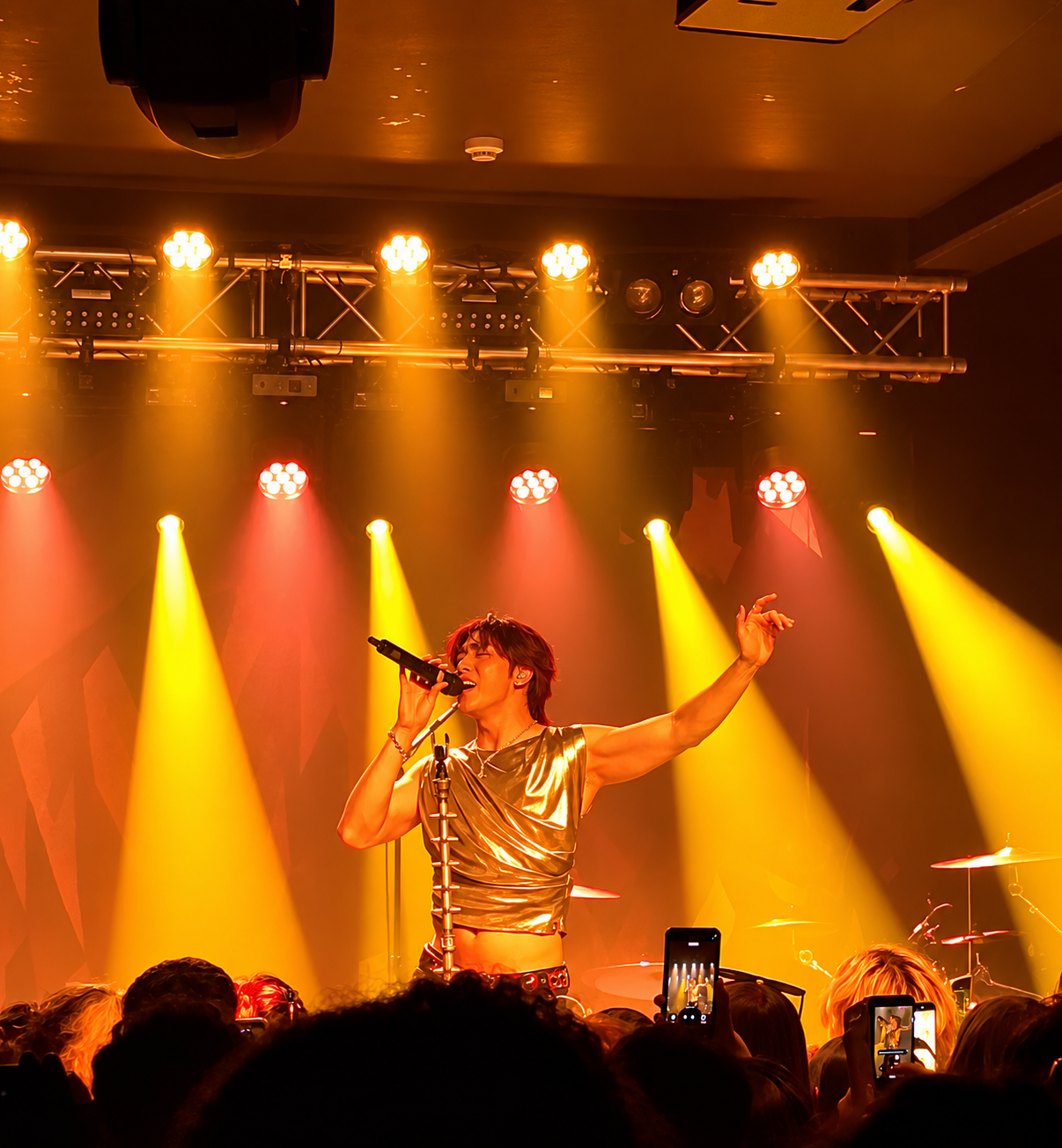
Credits: Zutter.co.uk Photographer: Paola
"When one of us wins, all of us win"
Z: Beyond your own music, you've started building something for other artists. Tell me about Mooncake. Where does the name come from, and how does it work?
MT: My dad is Taiwanese and my mom is Chinese-Peruvian, and I've always felt really connected to my Asian culture. I struggled a lot as an Asian artist in LA, especially finding other Asian artists, going into these rooms and being the only Asian person there. It just felt very isolating.
I think I had just released teenage nightmare, and I was like, "I want to do something bigger than me." I had just filmed three music videos in my backyard, and we had this stage built there. So I started hitting up all my Asian artist friends: "Hey, do you want to play an acoustic show at my house? I just want to celebrate us for the Lunar New Year." There's not many of us, and I feel like we should all support each other. When one of us wins, all of us win.
Thankfully, so many of my friends said yes. We were making stickers and physical tickets, and putting them into red envelopes. And I came up with the name Mooncake, because it signifies our Asian culture. Everything was out of my own pocket. I had my friend make a little cart out of wood so I could serve matcha, with my logo on the front that said "Mad's Matcha". I think the first one we hosted only had around 40 or 50 people, just close friends and family.
Eventually I started doing it twice a year: one for the Lunar New Year and one for the Autumn Moon Festival. We would change out the artists every time and only have API artists perform acoustic shows on the stage in my backyard. Every single time we've done it, it's gotten bigger. The last one we did, at the beginning of this year, had, I want to say, around 200 people, for one backyard. Now I want to make this a public thing. A lot of my fans have kind of seen it from the outside, but I want to bring them in.
Z: Could Mooncake become something bigger, like a label, a festival or a platform?
MT: Ideally, I would love for it to become a festival. That would be the dream: to celebrate everybody that's part of the API community, because there's so many of us doing cool things that are just so overlooked. I've had my friend MICO perform. I've had my friend Tiffany Day, who's now pioneering the electronic pop space and representing us. My friend Stephanie Poetri is writing amazing songs. We all started in one place, from humble beginnings, and it makes me excited to expand this and give everyone a piece of it.
Z: That's perfect, "a piece of it", because it's a mooncake!
MT: Oh, that's so perfect. I want to give them a slice of mooncake.
Z: In early 2025 you said you were working on your debut album. How is that coming along?
MT: I'm so excited. I've had this concept for a really long time, and I've held on to it because I wanted to make sure that I'm in the right space mentally and physically, and also as an artist, financially, to do it justice. I'm so reinvigorated. Being on tour has made me excited to go back into the studio, because now I want to write songs that everyone can scream and dance to when I'm on the next tour.
Z: Where do you see yourself in five years? Bigger rooms, bigger stages, a festival, Mooncake?
MT: Hopefully all of that. I've been working really hard for the last five or six years to be an artist, and I never would have thought I would have achieved any of the things [I have] now. So now I'm at the stage where I'm fully delusional, and I'm like, "I can do anything." I want to expand Mooncake into a festival. I want to do bigger shows. I want to be a pop star. I'm putting that into the universe: I'm going to be a pop star. So God help me, and everyone's gonna watch me go.
Z: Anything you'd like to say to your fans?
MT: Thank you for sticking by me and for being so supportive of me over the years. I couldn't have done it without the fans, honestly. They've given me everything, and they've been so, so kind and so patient with me releasing my music and figuring myself out as an artist and as a person. Just know that I'm working my ass off, and I will give them the debut project that I'm confident in, in due time.
CANINES is out now. The BITE BACK Tour continues in North America in November.
RELATED ARTICLES
LATEST
MORE IN:
Mad Tsai tells Zutter why he said no to labels after his first viral hit, paid off his student debt with streaming and finally signed with an indie label.