

Why the Korean supermarket Oseyo keeps getting bigger
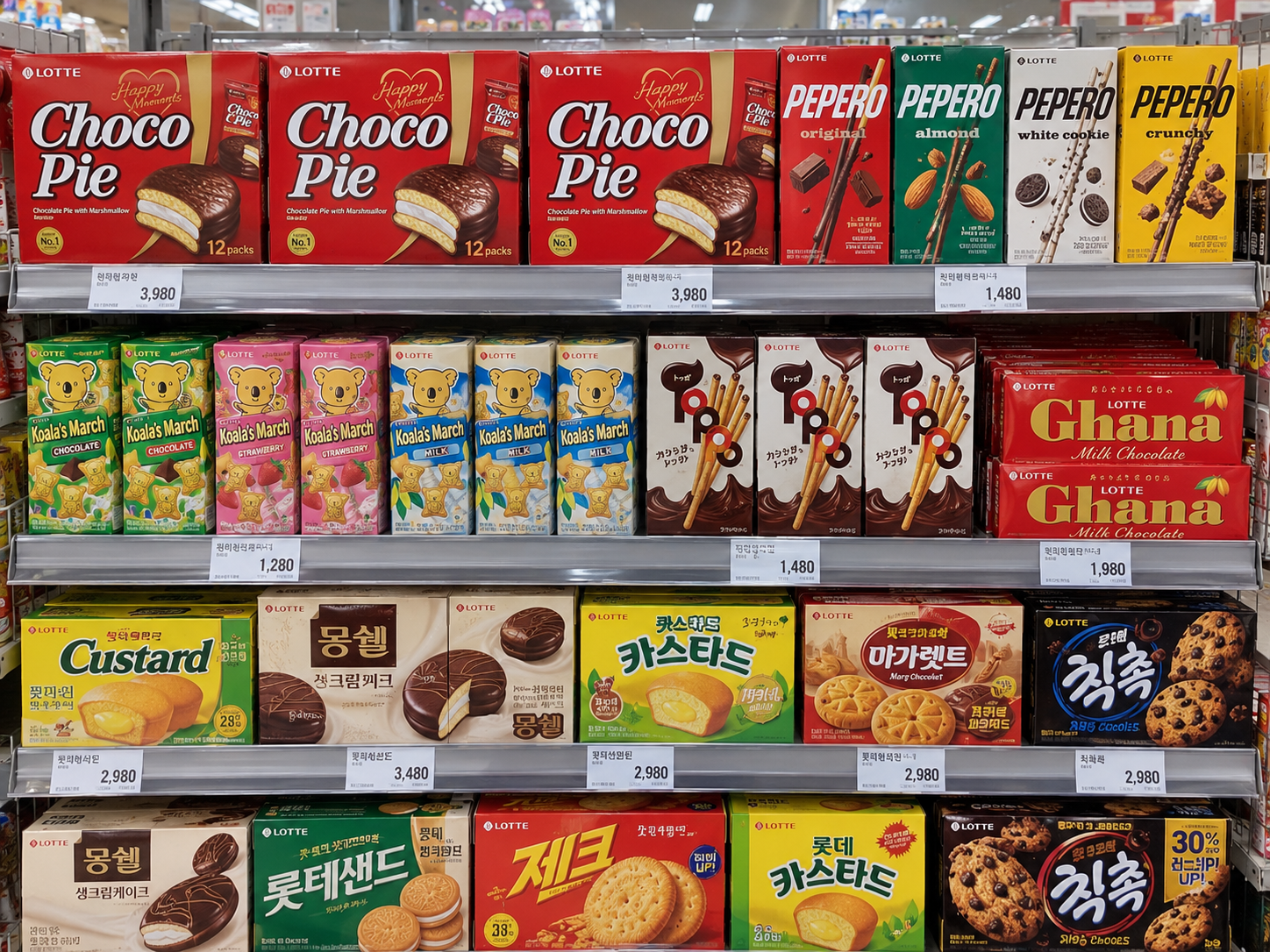
When Oseyo opened its nineteenth British store on The Moor in Sheffield in October last year, it took three floors and about 13,000 sq ft, and built an atrium rising through all of them, a curated tea house display and a station where customers pour pouches of juice over cups of ice.
The reason is that the shop is now the attraction. Asian supermarkets in Britain have stopped competing on range and started competing on the hour a customer spends inside, because the range itself is constrained by rules that have nothing to do with taste.
Oseyo's newest stores have atriums, photobooths and claw machines. The grocery is the smallest part of the plan.
Nine months later the chain opened again in Newcastle's Eldon Square, billing it as its largest store yet, with Korean photobooths and Japanese arcade claw machines alongside the groceries, according to the Hexham Courant. The opening was marked with a lion dance and tastings.
In London the expansion has been quieter and faster. Oseyo's Wimbledon branch was its sixteenth, opening in early 2025, with Liverpool Street station, Notting Hill, Birmingham and Sheffield all scheduled for that year, The Grocer reported. Five had opened the year before that.
What has changed inside is more interesting than the square footage. The chain's inventory was once roughly 80% Korean goods and 20% other Asian, and is now closer to half Korean, 40% other Asian and 10% western, the company's Isaac Kweon told the same paper. It has moved into south Asian ingredients and British brands.
Kweon's framing of the limit is worth keeping: "At the end of the day, we're an Asian supermarket, specifically a Korean supermarket."
The hard constraint is at the border. Oseyo is not allowed to import dairy or meat from Korea, Kweon said, which is part of the commercial logic behind its own-label range. A chain that cannot ship a Korean sausage or a Korean yoghurt has to manufacture its equivalent here or sell something else in that space.
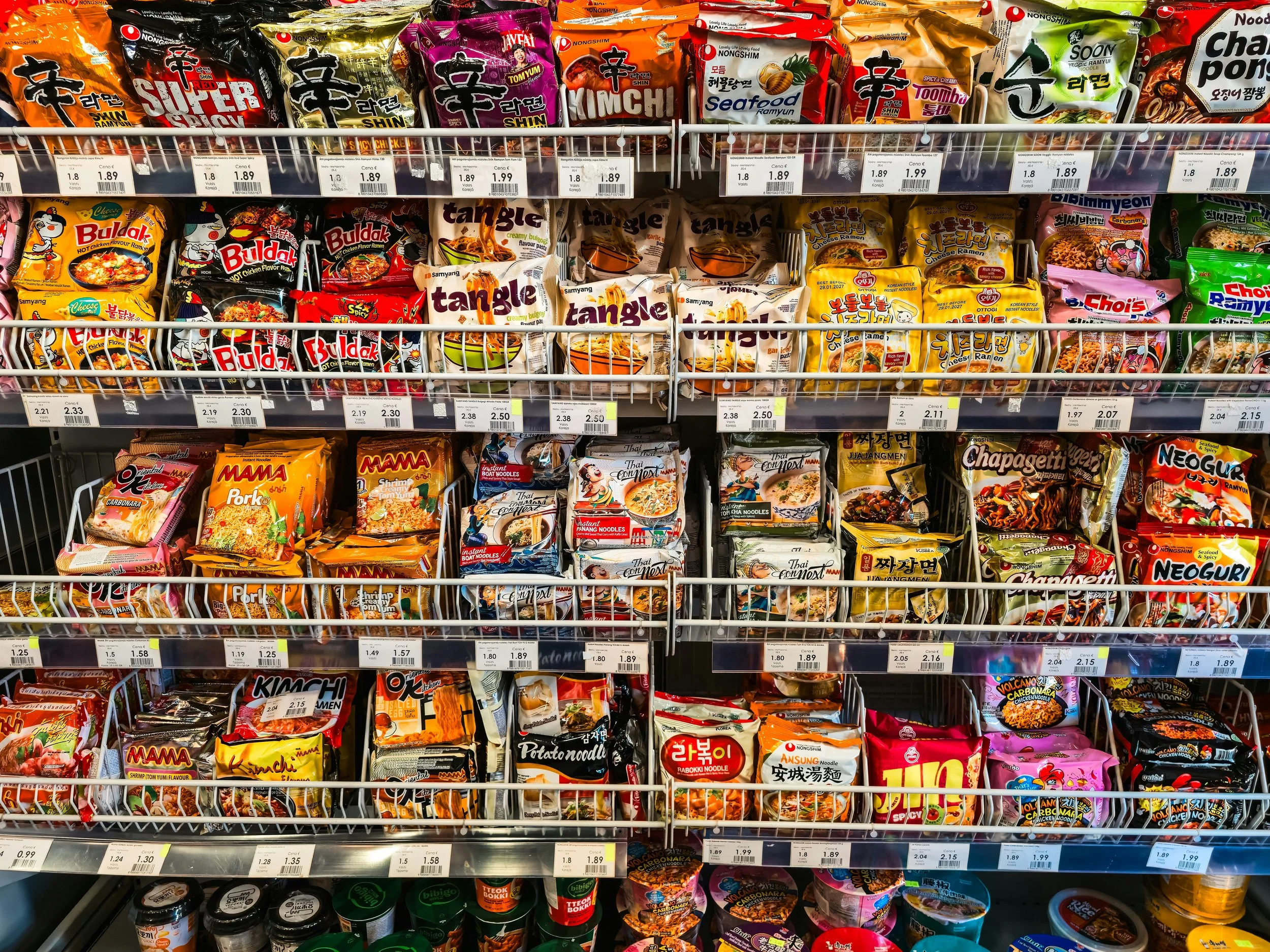
What reaches a London shelf is filtered first by what can legally cross, then by what a landlord will lease, and only then by what anybody wants to eat. The branded stock does the rest: Lotte, Samyang, Nongshim, Daesang, CJ Bibigo and Cuckoo were the names Oseyo led with in Sheffield.
Behind it sits a trade that is growing faster in Europe than anywhere else. Korean food exports to Europe, a figure that includes Britain, rose 24.5% in the first eight months of this year to $865m, outpacing both the United States and China.
There is also a question nobody has answered about who this is for. A 15,000 sq ft Korean supermarket in Sheffield is not serving a Korean population of that size. It is serving people who found the products somewhere else first, which makes the shop downstream of the internet rather than of a neighbourhood.
SOURCES (1) (2) (3) (4) (5)RELATED ARTICLES
LATEST
MORE IN:
Oseyo's newest British stores have atriums, photobooths and claw machines. What reaches the shelf is decided by import rules and landlords, not by taste.