

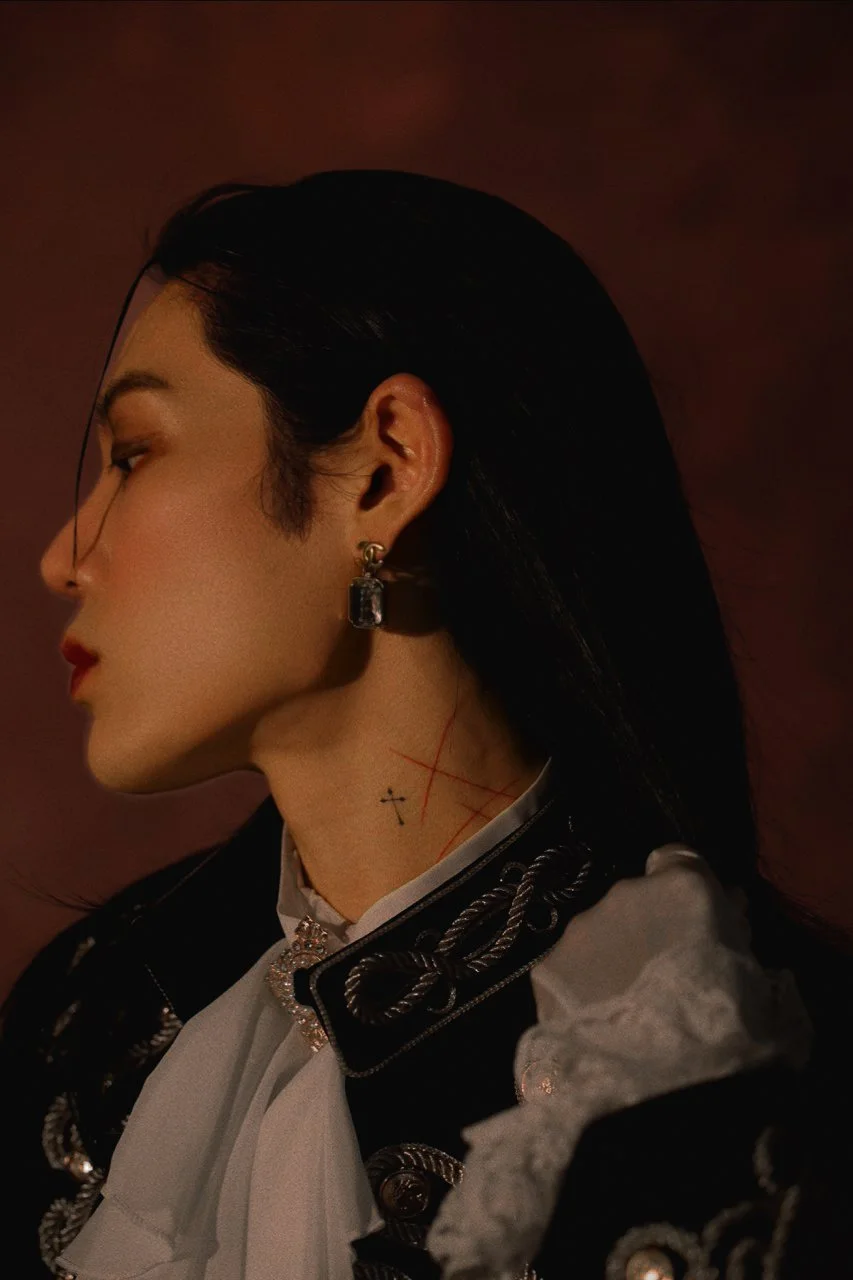
Photo: Elia Gabassi
The producer behind "Daechwita" and "Telepathy" released his debut album "WHO KILLED EL?". In his interview with Zutter, he explains why he went independent, why he set aside a finished album, and how his old voice found its way back onto the record.
EL CAPITXN released his debut album, "WHO KILLED EL?", on Friday the 6th of November, after years of writing songs that made other artists sound most like themselves.
Before "Daechwita", "Telepathy" and "eight", he was Jang Yi-jeong, the main vocalist of HISTORY, which debuted in 2013. He lost his singing voice, and spent the years since building a catalogue of more than 100 songs for other people.
This record is the one he kept for himself. He toured the world before releasing a single song, set aside a finished album along the way, and brought in ten guest acts to sing his story. On one track, "Crying", his own voice from the HISTORY years comes back.
He answered our questions the way he made the record, holding nothing back. His answers appear here in full, in English and Korean.
ZUTTER: The theme of death has run through your songs since your HISTORY days, from “Might Just Die” to WHO KILLED EL?. Why do you think you keep going back to it?
죽음이라는 테마는 히스토리(HISTORY) 시절의 "죽어버릴지도 몰라(Might Just Die)"부터 <WHO KILLED EL?>에 이르기까지 당신의 곡들을 관통해 왔습니다. 왜 계속해서 이 주제로 돌아가게 된다고 생각하시나요?
EL CAPITXN: That is an interesting question. Honestly, I had not even realized I had been addressing the theme of death for so long. However, death back then and death now carry slightly different meanings for me. During my HISTORY days, death served as a dramatic emotional expression. For me today, death has become a far more realistic concept.
I do not believe physical cessation is the only way a person experiences death. When you lose the very thing that defined you, or when a value you trusted your entire life shatters, a person's entire world can come to an end. Fascinatingly, we continue to live on even after experiencing that kind of death, completely transformed into a different being from who we used to be.
Perhaps what I continuously want to talk about is not death itself, but rather the life that does not end even after death.
흥미로운 질문이네요. 사실 저도 이렇게 오랫동안 죽음이라는 주제를 다루고 있었다는 사실을 의식하지 못했습니다. 다만 그때와 지금의 죽음은 조금 다른 의미인 것 같아요. 히스토리 시절에는 죽음이 하나의 극적인 감정 표현이었다면, 지금의 저에게 죽음은 훨씬 현실적인 개념이 되었습니다.
저는 사람이 반드시 육체적으로 죽어야만 죽음을 경험한다고 생각하지 않아요. 자신을 정의하던 무언가를 잃거나, 평생 믿었던 가치가 무너지는 순간에도 한 사람의 세계는 끝날 수 있다고 생각합니다. 그리고 흥미롭게도 우리는 그런 죽음을 경험하면서도 계속 살아가죠. 이전의 자신과는 전혀 다른 존재가 되어버린 채로요.
어쩌면 제가 계속 이야기하고 싶은 건 죽음 자체가 아니라, 죽음 이후에도 끝나지 않는 삶인지 모르겠습니다.
Z: HISTORY wrote much of its own music, which was rare for an idol group at the time. What did writing from inside a group give you that you still use with the artists you produce today?
히스토리는 당시 아이돌 그룹으로서는 드물게 자체적으로 많은 곡을 작업했습니다. 그룹 내부에서 직접 곡을 썼던 경험이 오늘날 프로듀싱하는 아티스트들에게 여전히 활용하고 있는 어떤 밑거름이 되어 주었나요?
EC: Before I was a songwriter, I was a singer. Before I was a producer, I was someone directly expressing another person's music up on stage. Because of that background, I naturally approach music creation through two perspectives: the perspective of the creator, and the perspective of the performer who must bring it to life.
A melody that feels flawless to a songwriter might feel uncomfortable to a singer, and an emotion intended by a producer might not align with the artist's natural temperament. Writing, singing, and experiencing music firsthand with HISTORY gave me invaluable insight into bridging those gaps. Even now, when producing for other artists, I prioritize the music they can deliver with the most conviction over the music I personally want to make.
Ultimately, I believe a great producer does not exist to validate their own musical taste, but to accurately uncover and bring out the full spectrum of an artist's potential.
저는 작곡가이기 전에 가수였고, 프로듀서이기 전에 누군가의 음악을 직접 무대 위에서 표현하던 사람이었습니다. 그래서 음악을 만들 때 자연스럽게 두 가지 관점으로 생각하게 됩니다. 만드는 사람의 입장과 그것을 실제로 표현해야 하는 사람의 입장이죠.
작곡가에게는 완벽한 멜로디가 가수에게는 불편한 멜로디일 수도 있고, 프로듀서가 의도한 감정이 정작 아티스트의 성격과는 맞지 않을 수도 있습니다. 히스토리에서 음악을 만들고 직접 부르며 경험했던 것들이 그런 차이를 이해하는 데 큰 도움이 되었습니다. 지금도 다른 아티스트를 프로듀싱할 때 제가 만들고 싶은 음악보다 그 아티스트가 가장 설득력 있게 표현할 수 있는 음악을 먼저 고민합니다.
결국 좋은 프로듀서는 자신의 음악적 취향을 증명하는 사람이 아니라, 아티스트가 가진 가능성을 가장 정확하게 발견하는 사람이라고 생각합니다.
Z: For “Daechwita,” “Telepathy” and “eight,” you built sounds around someone else’s identity. What on WHO KILLED EL? is so entirely yours that it would never have fitted anyone else?
"대취타", "내 방을 여행하는 법(Telepathy)", "에잇(eight)" 같은 곡들에서는 타인의 정체성을 중심으로 사운드를 구축했습니다. WHO KILLED EL?에서 온전히 본인만의 것이어서 다른 누구에게도 맞지 않았을 요소는 무엇인가요?
EC: Perhaps it is the very paradox that defines this album. I am someone who desperately wants to sing yet can no longer sing as I once did. In spite of that, I chose to release an album under my own name and step onto the stage. Because of this, numerous artists' voices appear across the album. Yet the owner of the emotions and the narrative they express is ultimately one person.
Specifically on the track "Crying," I restored the voice from my past when I sang under the name JANGYIJEONG. In that sense, who I am today meets who I was back then within a single song. Borrowing other voices to tell my personal story, while simultaneously coming face to face with the voice I lost. While someone might be able to craft an album with a similar sonic landscape, this paradoxical experience is entirely mine and could never be replaced by anyone else.
아마도 이 앨범이 가진 모순 자체일 것 같습니다. 저는 노래를 하고 싶지만 예전처럼 노래할 수 없는 사람이고, 그럼에도 제 이름으로 앨범을 만들고 무대에 서기로 결정했습니다. 그래서 이 앨범에는 수많은 아티스트의 목소리가 등장합니다. 하지만 그들이 표현하는 감정과 이야기의 주인은 결국 한 사람입니다.
특히 울고있어요라는 곡에서는 과거 장이정이라는 이름으로 노래하던 제 목소리를 복원했습니다. 현재의 저와 과거의 제가 하나의 곡 안에서 만나는 셈이죠. 누군가의 목소리를 빌려 자신의 이야기를 하고, 동시에 자신이 잃어버린 목소리와 다시 마주하는 앨범. 음악적으로 비슷한 작품은 만들 수 있겠지만, 이 모순된 경험만큼은 다른 누구의 것으로도 대체할 수 없다고 생각합니다.
Z: You’ve said that when you produce for other artists, you put the artist first. On this album you were the artist. What was hardest about producing yourself?
다른 아티스트를 프로듀싱할 때는 아티스트를 최우선으로 둔다고 말씀하신 바 있습니다. 이번 앨범에서는 본인이 직접 아티스트였습니다. 스스로를 프로듀싱하면서 가장 힘들었던 점은 무엇이었나요?
EC: Being excessively unforgiving and critical of myself was the hardest part. When producing for other artists, I focus on identifying their strengths, addressing areas that need refinement, and steering the project toward the best possible outcome.
When creating my own music, however, the dynamic flipped completely. No matter how strong the result was, I immediately fixated on what was lacking. At times, I ended up projecting my personal frustrations with myself onto the music rather than dealing with purely musical challenges. As a producer, I know when to decisively cut what is unnecessary. Yet as an artist, I found it difficult to let go of the raw emotions embedded in those choices.
Ultimately, the hardest part of this album was not producing the music itself, but finding balance between my judgment as a producer and my vulnerability as an artist.
저 자신에게 지나치게 냉정하다는 점이 가장 어려웠습니다. 다른 아티스트를 프로듀싱할 때는 그 사람의 장점을 발견하고, 부족한 부분을 보완하면서 가장 좋은 결과를 찾아가는 편입니다.
그런데 제 음악을 만들 때는 정반대가 되더라고요. 아무리 좋은 결과물이 나와도 부족한 부분부터 찾게 되고, 때로는 음악적인 문제가 아니라 제 자신에 대한 불만을 음악에 투영하기도 했습니다. 프로듀서인 저는 불필요한 것을 과감하게 버려야 한다고 생각하지만, 아티스트인 저는 그 안에 담긴 감정을 쉽게 포기하지 못하니까요.
결국 이번 앨범에서 가장 어려웠던 것은 음악을 만드는 일이 아니라, 프로듀서로서의 판단과 아티스트로서의 감정 사이에서 균형을 찾는 일이었습니다.
Z: You launched Vendors Production in 2024 to improve conditions for songwriters, who you said sit in a blind spot of K-pop. What needed fixing most, and what has actually changed?
당신은 K팝의 사각지대에 놓여 있다고 언급했던 작곡가들의 처우와 환경을 개선하기 위해 2024년 벤더스 프로덕션(Vendors Production)을 설립했습니다. 가장 개선이 필요했던 부분은 무엇이었으며, 실제로 무엇이 바뀌었나요?
EC: The most critical issue for me was that creators had disproportionately little control and choice relative to their actual capabilities. While K-pop has grown into a global industry, the names and contributions of the people crafting the music often remain largely invisible to the public. For independent songwriters working on their own, protecting their rights and value is far more challenging than people realize.
I did not launch this company simply to provide songwriters with more gigs. I wanted to build a structure where collective talent could lead larger projects, allowing creators to serve as key decision-makers driving the vision rather than remaining mere suppliers of music. Today, VENDORS has evolved beyond songwriting and production. We actively design the artist's creative direction, visual identity, performance, and global partnerships.
I do not believe every systemic issue has been solved yet. I am continuously learning as I run the company. However, building an organization where we can independently define the worth of the music we create, as well as the worth of the creators behind it, represents a distinct and meaningful change.
제가 가장 중요하게 생각했던 것은 창작자들이 자신의 능력에 비해 지나치게 적은 선택권을 가지고 있다는 점이었습니다. K팝은 세계적인 산업이 되었지만, 그 음악을 만드는 사람들의 이름이나 역할은 여전히 대중에게 충분히 알려지지 않는 경우가 많습니다. 그리고 개인 작곡가가 독립적으로 활동하면서 자신의 권리나 가치를 지키는 일도 생각보다 쉽지 않습니다.
저는 단순히 작곡가들에게 더 많은 작업을 제공하는 회사를 만들고 싶었던 것이 아닙니다. 각자의 능력이 모였을 때 더 큰 프로젝트를 주도할 수 있고, 창작자가 단순한 음악 공급자가 아니라 프로젝트의 방향을 결정하는 주체가 될 수 있는 구조를 만들고 싶었습니다. 현재 VENDORS는 작곡과 프로듀싱을 넘어 아티스트의 음악적 방향, 비주얼, 퍼포먼스, 글로벌 협업까지 함께 설계하는 팀으로 확장되고 있습니다.
물론 아직 모든 문제가 해결되었다고 생각하지는 않습니다. 저 역시 회사를 운영하며 계속 배우고 있고요. 하지만 적어도 우리가 만든 음악의 가치와 그 음악을 만든 사람들의 가치를 스스로 정의할 수 있는 조직을 만들고 있다는 점은 분명한 변화라고 생각합니다.
Photo: Elia Gabassi
Z: Vendors releases your music in partnership with EMPIRE, an American independent. You told Forbes a big company didn’t fit who you are now. What on WHO KILLED EL? do you think a big Korean company would never have let you do?
벤더스는 미국 인디펜던트 유통사인 EMPIRE와의 파트너십을 통해 당신의 음악을 발매하고 있습니다. 포브스(Forbes) 인터뷰에서 대형 기획사는 지금의 당신과 맞지 않는다고 언급하셨는데요. WHO KILLED EL? 의 어떤 부분들이 한국의 대형 기획사였다면 결코 허락되지 않았을 것이라고 보시나요?
EC: I would not flatly assert that a major Korean company would never have allowed it. There are extraordinary creators within that system, and I spent years producing great music inside that very infrastructure.
That said, viewed strictly through the lens of a conventional artist debut, WHO KILLED EL? could easily be seen as an inefficient and high risk project. The centerpiece artist cannot sing as he once did, a variety of guest artists sing in his place, and the sonic palette swings from gothic rock to full orchestral arrangements and gospel. Had commercial safety been the primary benchmark, substantial parts of this record might have been altered. Yet I believed those very imperfections formed the identity of this album.
What I needed was not an environment where every choice required institutional approval, but an environment where I could take full ownership and responsibility for the choices I made. That is why I chose an independent path, and EMPIRE fully respected that artistic direction.
한국의 대형 기획사였다면 절대 허락하지 않았을 것이라고 단정하고 싶지는 않습니다. 그곳에도 훌륭한 창작자들이 있고, 저 역시 오랫동안 그 시스템 안에서 좋은 음악을 만들어왔으니까요.
다만 WHO KILLED EL?은 일반적인 아티스트 데뷔 프로젝트의 관점에서 보면 상당히 비효율적이고 위험한 작품일 수 있습니다. 정작 앨범의 주인공은 예전처럼 노래할 수 없고, 여러 아티스트가 그를 대신해 노래하며, 음악은 고딕 록에서 오케스트라와 가스펠까지 이어집니다. 상업적으로 가장 안전한 선택을 기준으로 삼았다면 이 중 상당 부분을 수정해야 했을지도 모르겠습니다. 하지만 저는 바로 그런 불완전함이 이 앨범의 정체성이라고 생각했습니다.
제게 필요한 것은 모든 선택을 허락받을 수 있는 환경이 아니라, 제가 내린 선택의 결과를 직접 책임질 수 있는 환경이었습니다. 그래서 독립적인 방식을 선택했고, EMPIRE 역시 그 방향을 존중해 주었습니다.
Z: You still produce for HYBE artists while making your own record. Has a song ever started as someone else’s and ended up on WHO KILLED EL?, or the other way round?
본인의 앨범을 작업하면서도 여전히 하이브(HYBE) 아티스트들의 곡을 프로듀싱하고 있습니다. 다른 아티스트를 위해 시작되었다가 WHO KILLED EL?에 실리게 된 곡이 있거나, 혹은 그 반대의 경우가 있었나요?
EC: When writing music, who the song speaks for is deeply important to me. Music crafted for another artist originates from understanding their world. In contrast, WHO KILLED EL? stems directly from my lived experiences and emotions. Because of that, rather than simply compiling polished tracks, I focused heavily on what role each song played within my personal narrative. No matter how exceptional a track was, if it could not articulate my story, it had no place on this album.
Ultimately, even when written by the same creator, music yields fundamentally different results depending on who it is written for and why it is made.
저는 음악을 만들 때 그 곡이 누구의 이야기를 해야 하는지 굉장히 중요하게 생각합니다. 다른 아티스트를 위한 음악은 그 사람의 세계를 이해하는 것에서 출발하지만, WHO KILLED EL?은 제가 경험한 감정과 사건들에서 출발한 작품입니다. 그래서 이번 앨범에서는 단순히 완성도가 높은 곡을 모으는 것보다, 각각의 곡이 제 이야기 안에서 어떤 역할을 하는지를 중요하게 생각했습니다. 아무리 좋은 곡이라도 제 이야기를 설명할 수 없다면 이 앨범에 필요하지 않다고 판단했을 겁니다.
결국 같은 사람이 만드는 음악이라도 누구를 위해, 무엇을 위해 만드는지에 따라 전혀 다른 결과물이 나오는 것 같습니다.
Z: You’ve said your first album was finished before the WHO KILLED EL? tour, and that you set it aside to release songs born on the road instead. What did you hear on stage that the finished album didn’t have?
WHO KILLED EL?투어 전에 이미 첫 앨범 작업이 끝났었지만, 투어 중에 탄생한 곡들을 발표하기 위해 기존 완성본을 내려놓았다고 말씀하셨습니다. 완성되었던 기존 앨범에는 없고 무대 위에서 직접 들었던 것은 무엇이었나요?
EC: I think it was the sensation of music truly coming to life.
While you can judge a track's technical polish in the studio, it is nearly impossible to fully understand how that music resonates with people until you step onto a stage. I launched a world tour without an album out. In the beginning, it was not even entirely clear to me how to define who I was as an artist. Yet as I performed across different cities and engaged directly with the audience's reactions and expressions, what kind of music I truly wanted to create began to crystallize. If the original album represented EL CAPITXN conceived purely in my mind, the post tour album was far closer to the EL CAPITXN I actually discovered on stage.
If you ask whether it was painful to shelve a finished record, of course it was. However, releasing an album that accurately captures who I am right now was vastly more important than simply releasing a completed one.
아마도 음악이 실제로 살아 움직이는 순간이었던 것 같습니다.
스튜디오에서는 음악의 완성도를 판단할 수 있지만, 그 음악이 사람들에게 어떤 의미로 전달되는지는 무대에 서기 전까지 완전히 알기 어렵습니다. 저는 앨범도 없는 상태에서 월드투어를 시작했습니다. 처음에는 저라는 아티스트를 어떻게 설명해야 할지조차 명확하지 않았어요. 그런데 여러 도시에서 공연하며 관객들의 표정과 반응을 직접 마주하다 보니, 제가 어떤 음악을 만들고 싶어 하는지 조금씩 명확해지기 시작했습니다. 기존 앨범이 제가 머릿속으로 생각한 EL CAPITXN이었다면, 투어 이후의 앨범은 무대 위에서 실제로 발견한 EL CAPITXN에 더 가까웠습니다.
이미 완성한 음악을 버리는 것이 아깝지 않았냐고 묻는다면, 당연히 아까웠습니다. 하지만 완성된 앨범을 발표하는 것보다 지금의 저를 정확하게 설명하는 앨범을 만드는 일이 훨씬 중요했습니다.
Z: Taehyun brings a K-pop audience, Jeremy Zucker an American pop one, Beauty School Dropout the LA rock scene. Were those collaborations chosen for the song, for the audience, or is that a distinction a producer eventually stops making?
태현(Taehyun)은 K팝 리스너를, 제레미 주커(Jeremy Zucker)는 미국 팝 리스너를, 뷰티 스쿨 드롭아웃(Beauty School Dropout)은 LA 록 씬의 관객을 끌어옵니다. 이러한 협업은 순수하게 곡을 위한 선택이었나요, 타깃 관객을 염두에 둔 선택이었나요, 아니면 프로듀서로서 결국 그런 구분을 두지 않게 되는 영역인가요?
EC: As a producer, it would be untruthful to say I disregard the market and the audience. However, the foundational standard for choosing collaborators remains the music itself. For example, on "Breaking Through," Taehyun and Jeremy Zucker come from vastly different musical backgrounds, yet both possessed the ability to articulate the track's core emotion convincingly in their respective styles. On the other hand, "Don't Say Love" demanded a much rawer, volatile energy, and Beauty School Dropout felt naturally equipped to deliver that tension.
I do not believe that assembling famous artists automatically results in a compelling collaboration. What excites me is when artists from entirely different worlds tap into a shared emotion, producing something that could never have existed prior. Bringing diverse audiences together through that music is a welcome outcome, but it serves as the end result rather than the starting point.
프로듀서로서 시장과 청중을 고려하지 않는다고 말한다면 거짓말이겠죠. 하지만 협업할 아티스트를 선택하는 가장 중요한 기준은 여전히 음악입니다. 예를 들어 Breaking Through에서 태현과 제레미 주커는 서로 다른 음악적 배경을 가지고 있지만, 그 곡이 가진 감정을 각자의 방식으로 설득력 있게 표현할 수 있는 아티스트들이었습니다. 반대로 Don't Say Love에서는 훨씬 거칠고 불안정한 에너지가 필요했고, Beauty School Dropout이 그 감정을 표현하기에 적합하다고 생각했습니다.
저는 유명한 아티스트를 모아놓는 것만으로 좋은 협업이 완성된다고 생각하지 않습니다. 오히려 서로 다른 세계에 있던 아티스트들이 하나의 감정을 공유하면서 이전에는 없었던 결과물을 만들어내는 순간이 흥미롭습니다. 서로 다른 시장의 청중들이 그 음악을 통해 만나게 된다면 좋은 일이겠지만, 그것은 협업의 출발점보다는 결과에 가깝습니다.
Z: More than 100 of your songs live in other artists’ catalogues. WHO KILLED EL? is the first that will live in yours. Ten years from now, when nobody remembers where it charted, what do you want it to have proved?
100곡이 넘는 당신의 음악이 다른 아티스트들의 카탈로그에 담겨 있습니다. <WHO KILLED EL?>는 당신의 카탈로그에 오롯이 남을 첫 번째 기록입니다. 차트 순위를 기억하는 사람이 아무도 없을 10년 뒤, 이 앨범이 어떤 것을 증명해 낸 작품으로 남기를 바라시나요?
EC: If nobody remembers where this album charted a decade from now, I am entirely fine with that. I do not want this album to stand as proof that I overcame every hardship and emerged as a flawless person. That narrative does not reflect my life. There are still unresolved struggles, and things I have not regained. Even ten years down the line, everything may not be neatly resolved. Yet I do not believe suffering a loss renders the life lived afterward meaningless.
There is only one thing I hope this album proves: Even if I never regained what was taken from me, the person writing my story was still me.
10년 뒤 아무도 이 앨범의 차트 순위를 기억하지 않는다면, 그것도 괜찮을 것 같습니다. 저는 이 앨범이 제가 모든 어려움을 극복하고 완전한 사람이 되었다는 증거로 남기를 바라지 않습니다. 사실 그런 이야기는 제 삶과도 맞지 않으니까요. 여전히 해결하지 못한 문제들이 있고, 되찾지 못한 것들도 있습니다. 아마 10년 뒤에도 모든 것이 해결되어 있지는 않을 겁니다. 하지만 무언가를 잃었다고 해서 그 이후의 삶까지 무의미해지는 것은 아니라고 생각합니다.
이 앨범이 증명했으면 하는 것은 단 하나입니다. 제가 잃어버린 것을 끝내 되찾지 못했더라도, 제 이야기를 쓰는 사람은 여전히 저 자신이었다는 사실입니다.
This interview was conducted by email. WHO KILLED EL? is out now through Vendors Production and EMPIRE.
RELATED ARTICLES
LATEST
MORE IN:
P1Harmony release BLOW UP, their hero finale with a hyperpop title track, eight months after UNIQUE hit No. 4 on the Billboard 200. Here is what is on it.