

Tokyo's answer to its designer problem is to back the factories
The Tokyo Fashion Award named eight winning brands on Saturday, two of them run by the sewing factories that make their clothes, at a ceremony at Shibuya Hikarie in Tokyo.
The award has selected 84 brands across twelve editions since 2014, Hiroshi Komoda, secretary-general of the Japan Fashion Week Organization, said at the announcement. Winners get a dedicated showroom in Paris four times a year, pop-up shops in Paris and Seoul, and a slot at next March's Rakuten Fashion Week Tokyo.
The Tokyo Fashion Award gave two of its eight places to sewing plants, six weeks after a sister award said its finalists could not sew well enough to win.
Six weeks earlier the same organisation had refused to give anything away. In a schedule release published on 28 July, it said the 2027 JFW Next Brand Award Grand Prix had been determined to be "no recipient", because its finalists were not yet ready to be selected or to stage a show, nor had financial strength including the budget to keep showing, and lacked quality "including sewing".
The eight brands it did select answer that in the most literal way available. Two of them are factories.
CIOTA is run by Masakazu Arasawa out of a sewing plant in Okayama, the prefecture that supplies most of the denim Japan exports. GOOD PEOPLE GOOD STITCHING GOOD PRODUCT comes from Daisuke Nakajo of MARUCHO, a cut-and-sew factory founded in 1954, Fashionsnap reported from the ceremony.
The rest of the menswear list is Taku Midorikawa's Midorikawa and Kenta Orimi's ORIMI. In womenswear, GURTWEIN by Teruhiro Hasegawa and Wing, OHROHEE by Park Sung-hee, POOLDE by Peri and Takemaru by Takemaru Abe.
Speaking at the ceremony, Keiichi Yoshimura, director-general of the Tokyo Metropolitan Government's Bureau of Industry and Labour, said Tokyo has no shortage of talented designers, and that what the city now asks of them is not only good design but the ability to take it to the world and build a business from it.
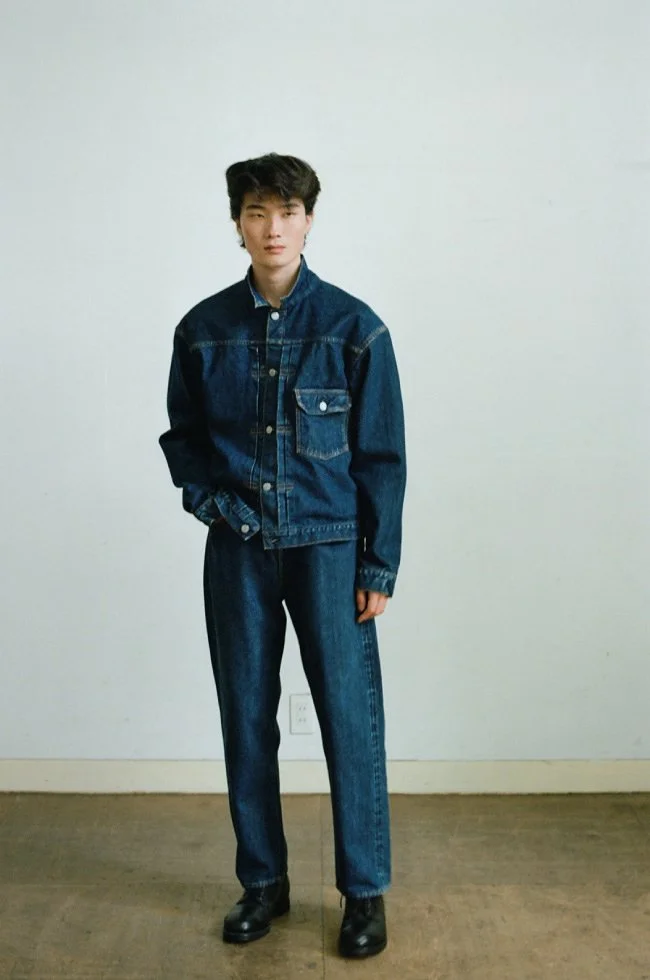
Photo from CIOTA lookbook
There is a reading in which none of this is a shift. The award's own entry conditions require applicants to be based in Tokyo and to have sold for at least three seasons at home or abroad, which filters for commercial survival before a jury sees anything. A factory that already runs a label clears that bar more easily than a designer three collections into a career, and always has.
Two of eight is also not a policy. It is a shortlist.
But the two awards were decided by the same organisation in the same season, and read together they describe a preference. One prize exists to fund a first show for a brand that cannot afford one, and went unclaimed. The other exists to send established brands to buyers in Paris, and went in part to the people who own the machines.
Komoda framed it as continuity rather than correction, telling the room that the quality Japanese manufacturing is known for rests on designers' ideas and on the production regions that turn them into garments, and asking the industry to support the eight winners over the next two years.
MARUCHO has been sewing cut-and-sew garments since 1954. The organisation that gave it the award turned twenty last September.
SOURCES (1) (2)RELATED ARTICLES
LATEST

MORE IN:
The Fashion Prize of Tokyo will fund two Paris runway shows for TANAKA, the denim label built by Uniqlo's former global design leads.