

Getting ready for Chuseok: the food on the harvest table
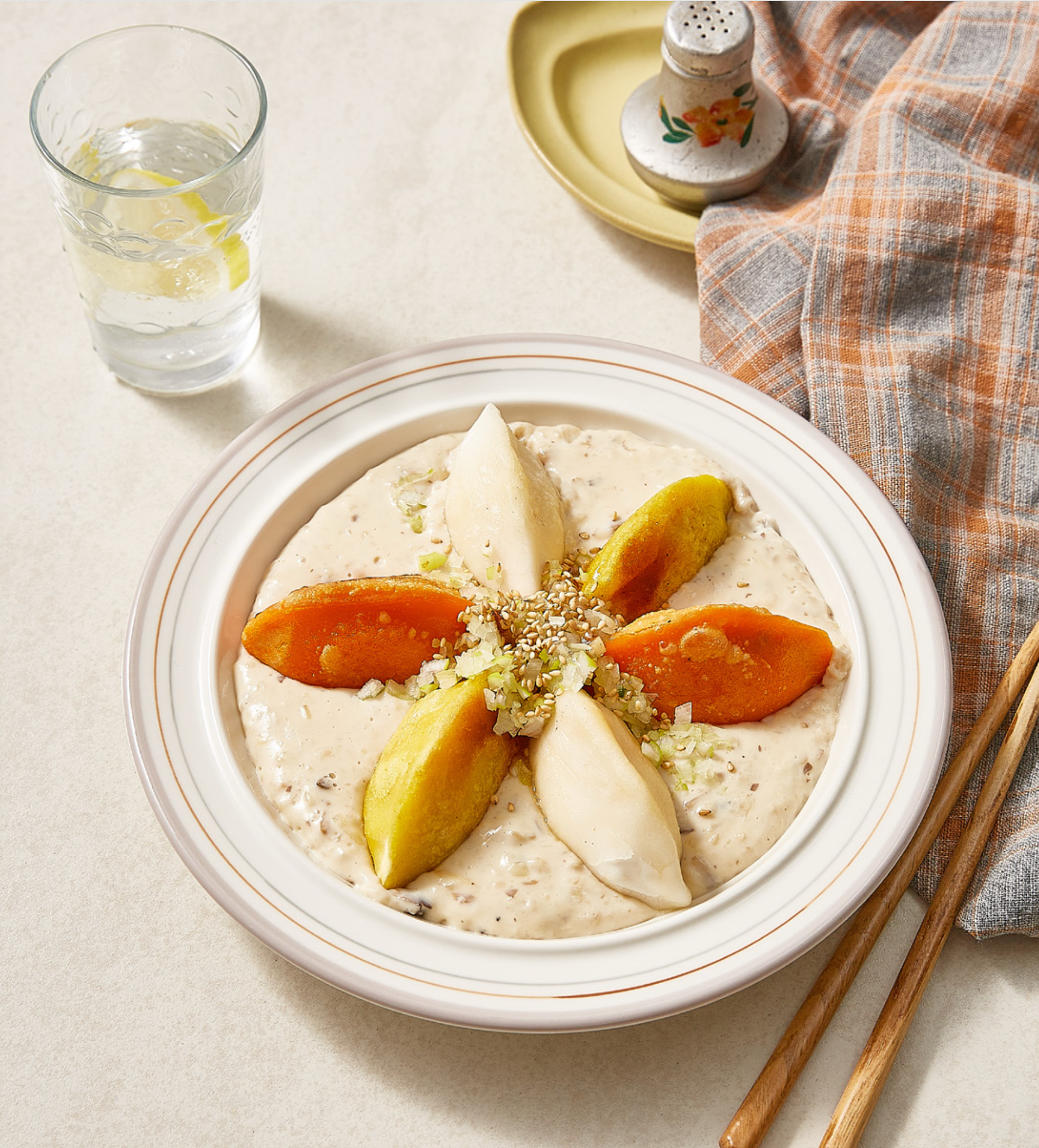
Chuseok, Korea's harvest festival, falls this Friday, and the days before it belong to the food: pan-fried jeon, glass noodles and trays of songpyeon, the half-moon rice cake steamed on pine needles.
The holiday runs from Thursday to Saturday in South Korea and falls on the fifteenth day of the eighth lunar month, the same full moon as the Mid-Autumn Festival in China, Tsukimi in Japan and Tết Trung Thu in Vietnam. Its Chinese characters mean autumn evening.
At the centre of the table is songpyeon. It is a rice-flour dough folded around a filling of sesame seeds, soybeans or red beans, then steamed, and families make it with newly harvested grain.
The half-moon shape stands for a waxing moon, which is believed to promise growth and prosperity. The bed of pine needles underneath gives the cakes a subtle fragrance and a nutty taste. Around it sits the rest of the harvest cooking: jeon, slices of fish, meat or vegetables dipped in egg and pan-fried, alongside japchae glass noodles and yakgwa, a biscuit flavoured with honey and ginger.
For anyone short of time, all of it can be bought ready-made in Korea over the holiday, from traditional markets, rice cake shops and restaurants.
Chuseok falls on Friday, and families across Korea will gather round a table of harvest food. At the centre of it is songpyeon, a half-moon rice cake steamed on pine needles.
The first plate of Chuseok morning is not for the family. Households that keep the custom lay a table for their ancestors in a rite called charye, and eat together once it is over.
Outside Korea, the rice cake has travelled well. Tteok, the family songpyeon belongs to, was long treated in Western markets as an acquired taste because of its chew, and is now winning fans across Europe and North America, the Korea Times reported in April.
For making it at home, try the recipe below, courtesy of the Korean Cultural Centre UK:
Spoonable Songpyeo (Half-moon Rice Cake)
Ingredients (1 serving):
Main ingredients: 60g of napa cabbage, 25g of soybean powder, 15g of roasted walnuts, 10g of lemon juice, 5g of cheongyang chili pepper, 30g of button mushrooms, 10g of garlic, 30g of onion, 150g of milk, 150g of fresh cream, 5g of green onion
Dough: 180g of short-grain rice flour, 2.5g of salt, 5g of gardenia powder, 10g of chili oil
Seasoning: 10g of cooking oil, 2g of whole peppercorns, 20g of unsalted butter, 2g of sesame seeds, 5g of oligosaccharide
How To Cook:
Sift the short-grain rice flour and salt together. Divide into 3 bowls; add gardenia powder to one bowl and chili oil to another, then knead each with hot water to make the dough. TIP Gradually add hot water to the flour and mix with a spatula, then knead by hand once it has cooled slightly.
Mince the napa cabbage and divide into 3 bowls. Mix one with roasted soybean powder and 10g of walnuts, one with lemon juice, and one with green chili. Stir-fry each separately and squeeze out excess moisture to make three songpyeon fillings.
Divide the dough into 45g portions. Wrap the lemonjuice filling in the gardenia dough, the cheongyang chili filling in the chili oil dough, and the soybean powder and walnut filling in the plain dough. Shape into songpyeon.
Drizzle cooking oil in a pan and pan-fry the songpyeon. In another pan, simmer oligosaccharide and roasted walnuts (5g) together until coated and glossy.
Sauté the finely chopped button mushrooms, garlic, onion, and whole peppercorns in unsalted butter until soft. Add milk and fresh cream and simmer together until slightly thickened to make a cream sauce.
Spoon the cream sauce into a bowl and arrange the pan-fried songpyeon on top. Finish with chopped green onion, sesame seeds, and the oligosaccharide-glazed walnuts.
Tips for Reducing Sodium and Sugar:
Aromatic cheongyang chili pepper and chili oil add heat and depth without extra salt.
Making the cream sauce from scratch using the umami of button mushrooms keeps the sodium in check.

Credits: Courtesy of the Korean Cultural Centre UK
RELATED ARTICLES
LATEST

MORE IN:
Chuseok falls on Friday, and families across Korea will gather round a table of harvest food. At the centre of it is songpyeon, a half-moon rice cake steamed on pine needles.