

One trial says topical salmon DNA works, but no British label tells you if it's the same molecule
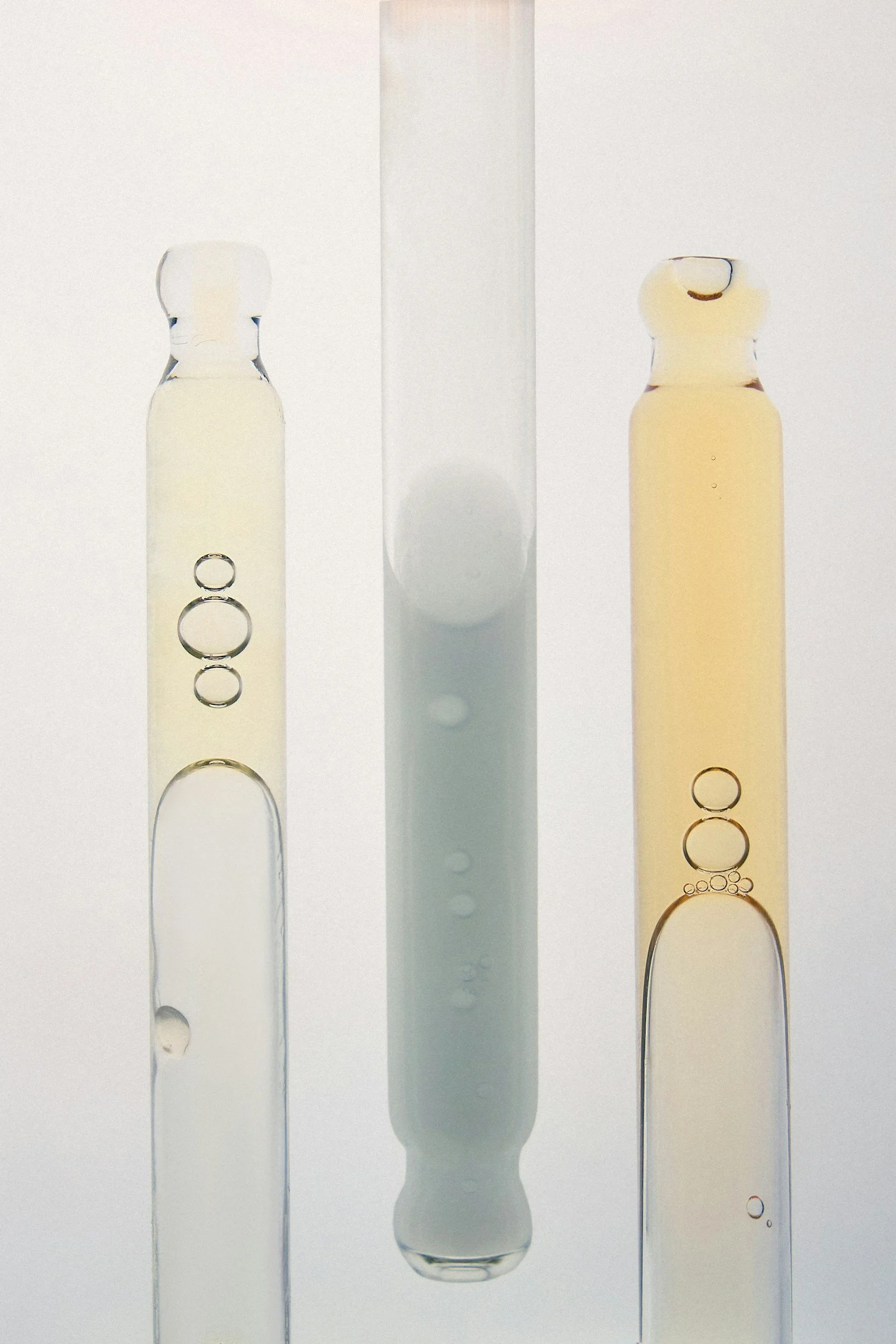
Dermatology Times said in an assessment published on Monday that the regenerative claims made for topical salmon-DNA serums remain unsubstantiated without disclosed molecular weight, encapsulation and in vivo delivery data.
The best-characterised topical preparation in the published literature, PDRN-850K, carries an average molecular weight of up to 850 kilodaltons, roughly 1,700 times the 500-dalton threshold above which substances are generally held not to cross intact skin unaided.
Polydeoxyribonucleotide, DNA fragments purified from salmon or trout milt, is the load-bearing claim in the fastest-growing part of British skincare. Medicube's PDRN Pink Peptide Serum sells at Boots for £24 and advertises 10,000 parts per million of salmon PDRN on the box. Ten thousand parts per million is one per cent. It is the only number most brands publish, and it describes how much of the ingredient is in the bottle rather than what the ingredient is.
PDRN's record was built with a needle. The single serious study of the topical version used a defined 850-kilodalton preparation, a figure nothing on sale here discloses.
PDRN's reputation was built with a syringe. Mastelli's injectable polynucleotide product has been licensed in Italy since 1994, and Korean clinics have used PDRN injections for wound healing and skin quality for years. The serum inherits the record without the route.
One trial has tested the topical version seriously. Writing in PLOS One on 10 July, Rui Ye and colleagues gave 31 Chinese women aged 35 to 55 an eye cream containing 0.1 per cent PDRN-850K on one side of the face and an identically formulated 0.1 per cent retinol cream on the other, twice daily for 28 days.
The PDRN side outperformed retinol on every measure the researchers took. Crow's feet wrinkle area and count fell by about 20 to 23 per cent against roughly 6 to 7 per cent for retinol, and increases in dermal thickness and density were about double.
The authors set out what that does not establish. Twenty-eight days is short for dermal remodelling, they wrote, and the early ultrasound readings may partly reflect hydration and plumping rather than repair.
Their delivery evidence is thinner than the clinical result. Raman spectroscopy cannot reliably separate applied PDRN from the nucleic acids already present in skin, Ye and colleagues said, and the technique cannot establish where the molecule ends up inside a cell.
Three of the five authors are affiliated with UNISKIN Research Institute on Skin Aging and DermaHealth Shanghai Biotechnology, both commercial skincare businesses, and the material was supplied by Ruijiming (Shandong) Biotechnology. The paper declares no competing interests and no funding.

None of that describes the products on sale here. The trial used a defined 850-kilodalton preparation with fragments averaging about 1,200 base pairs. No British listing checked for this piece states the molecular weight or fragment length of the PDRN inside it.
The ingredient is now difficult to avoid. Anua's PDRN mini serum is in the tote Skin Cupid is selling on its roadshow this month, the retailer runs PDRN as a browsable ingredient category, and StyleKorean's September box is sold on it.
Under the UK Cosmetics Regulation, whoever places a cosmetic on the British market must hold evidence supporting every claim made for it. Sephora UK's listing for the Medicube serum says the formula restores the skin barrier and boosts collagen, with visible results in two weeks.
The most direct published evidence that topical PDRN reaches living skin is a single volunteer's forearm, measured four times across one day, returning 3.06 per cent.
SOURCES (1) (2)RELATED ARTICLES

LATEST


MORE IN:
Dermatology Times said in an assessment published on Monday that the regenerative claims made for topical salmon-DNA serums remain unsubstantiated without disclosed molecular weight, encapsulation and in vivo delivery data.